Pakistan-China Industrial Cooperation: Advancing EVs, Battery Technology and Local Manufacturing
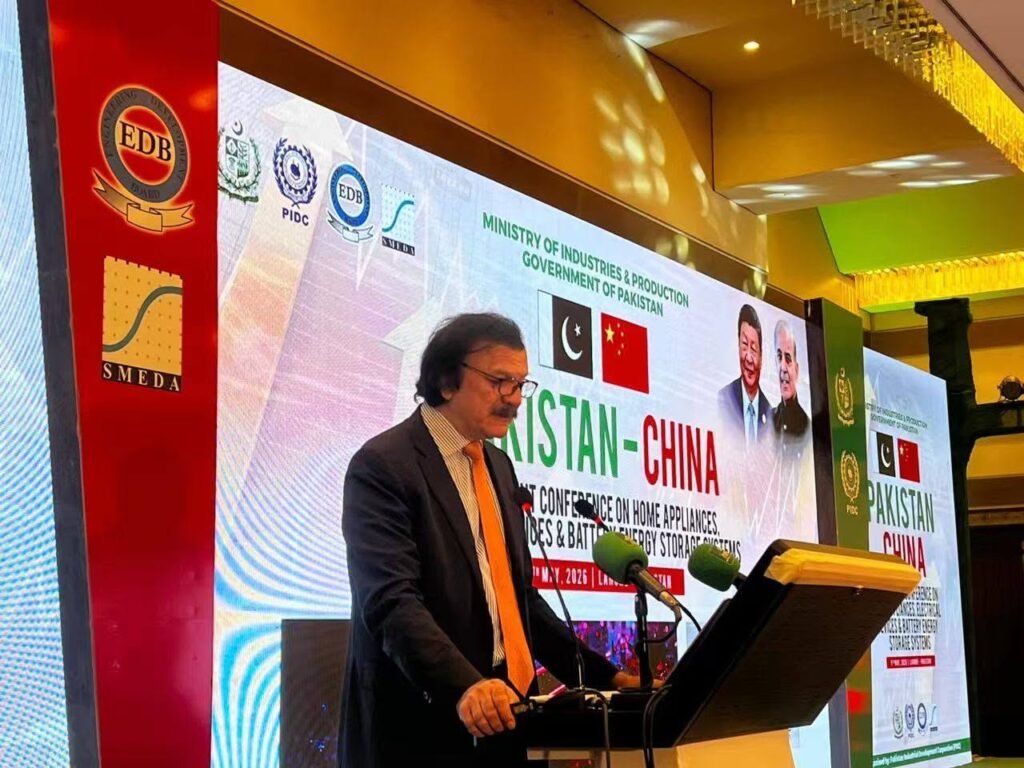
Pakistan is witnessing growing engagement with Chinese companies in key emerging industries, particularly electric vehicles (EVs), advanced batteries, energy storage, and clean energy technologies. Recent Business-to-Business (B2B) engagements between Pakistani and Chinese companies have highlighted opportunities for investment, technology transfer, joint ventures, and local manufacturing. In Islamabad, Special Assistant to the Prime Minister for Industries and Production, Haroon Akhtar Khan, held a series of one-on-one B2B meetings with leading Chinese and Pakistani companies to explore opportunities for industrial cooperation, investment, and technological development. Turning Agreements into Practical Projects During the meetings, Haroon Akhtar Khan emphasized the importance of moving beyond Memorandums of Understanding (MoUs) and agreements toward practical implementation. According to the Ministry of Industries & Production, the government is focusing on follow-up and execution of agreements to support meaningful industrial collaboration. This approach places greater emphasis on converting business discussions and partnerships into tangible projects that can contribute to Pakistan’s manufacturing capabilities and industrial development. Growing Interest in Electric Vehicles and Battery Manufacturing One of the key areas discussed during the B2B meetings was Pakistan’s emerging electric vehicle and battery sector. Chinese investors expressed interest in opportunities involving the assembly of electric vehicles, EV batteries, and advanced energy storage batteries, with the longer-term objective of developing local manufacturing capabilities. The government has also been working on policies intended to encourage investment and technological development in the battery and EV ecosystem. In July 2026, the Ministry reported that a forthcoming Battery Energy Storage System policy was intended to support local manufacturing, foreign investment, and the development of an EV ecosystem. Focus on Advanced Battery Technologies Advanced battery technology is becoming an increasingly important part of Pakistan’s clean energy and industrial landscape. The government’s stated objectives include encouraging the development and use of lithium-ion and sodium-ion battery technologies for industrial and everyday applications. Pakistan-China cooperation in this area has also included direct engagement with major Chinese battery technology companies. In May 2026, a Pakistani delegation visited CALB Group in China to learn about its battery manufacturing, research and development, electric vehicle, and energy storage technologies. Technology Transfer and Local Manufacturing Technology transfer is a central element of these industrial engagements. Cooperation with experienced international manufacturers can provide opportunities for Pakistani companies to develop local technical expertise, manufacturing capabilities, and supporting supply chains. For Pakistan, the development of domestic battery manufacturing could have applications across several sectors, including: The Ministry has also highlighted the potential of advanced battery manufacturing to strengthen local industry, support employment, and develop domestic engineering capabilities. Strengthening the EV and Clean Energy Ecosystem The development of an EV industry requires more than vehicle assembly. It also depends on supporting infrastructure such as battery manufacturing, charging networks, energy storage, technical skills, and related supply chains. Recent government engagements have included cooperation with Chinese companies working in EV charging infrastructure, energy storage, and smart energy technologies. The Ministry reported that Pakistan’s engagement with StarCharge included discussions around charging infrastructure, energy storage systems, and smart energy management. These developments indicate that Pakistan-China industrial cooperation is expanding beyond conventional manufacturing toward emerging technologies connected to clean energy and intelligent power systems. Opportunities for Pakistan’s Industrial Future Greater investment and technology partnerships in EVs, batteries, and energy storage could create opportunities for Pakistani businesses and technical professionals while supporting the development of new industrial supply chains. The key areas of opportunity include: In August 2026, the Ministry also reported continued progress on Pakistan-China B2B cooperation, including follow-up on MoUs and joint ventures across multiple sectors. Looking Ahead Pakistan’s energy and transportation sectors are entering a period of technological change, with electric mobility, battery storage, and renewable energy becoming increasingly interconnected. The continued engagement between Pakistani and Chinese companies provides a platform for exploring investment, technology transfer, local manufacturing, and long-term industrial partnerships. As these initiatives develop, successful implementation will depend on effective policy frameworks, private-sector participation, technical capacity, investment, and the conversion of agreements into operational projects. From electric mobility to advanced energy storage, the next phase of Pakistan’s industrial development could increasingly be shaped by technology, local manufacturing, and international collaboration. Yinergy Pakistan At Yinergy Pakistan, we remain committed to supporting the growth of Pakistan’s clean energy ecosystem through advanced solar inverters, lithium battery solutions, and smart energy technologies. Making Green Energy More Accessible. #YinergyPakistan #YinergySolar #SolarEnergy #EnergyStorage #BatteryTechnology #LithiumBattery #EVPakistan #ElectricVehicles #CleanEnergy #RenewableEnergy #SmartEnergy #SolarPakistan #EnergySolutions Connect with Yinergy Pakistan:🌐 Website: Yinergy Solar📘 Facebook: Yinergy Pakistan📸 Instagram: Yinergy Pakistan💼 LinkedIn: Yinergy Pakistan▶️ YouTube: Yinergy Pakistan🎵 TikTok: Yinergy Pakistan